

The 1600s were one of those times when everything seemed to happen all at once.
Kings built bigger kingdoms. Scientists made discoveries that changed how we see the world. Old ways of thinking got turned upside down.
In Europe, there were wars and revolutions. Over in China, the Qing dynasty was growing stronger. Japan decided to close its doors to outsiders.
And in India, the Mughal Empire created some of the most beautiful buildings we’ve ever seen.
People started trading with places they’d never been before. Cities got bigger and busier. Artists and writers had so much inspiration that they didn’t know where to start.
It was a time when the whole world seemed to be moving and changing. Let’s see what made this century so special.
Rulers and Emerging Nations
The 17th century witnessed the rise and fall of powerful empires and the solidification of monarchies. Kings like James I of England and Louis XIV of France redefined governance.
At the same time, the Romanov dynasty in Russia and the independence of the Dutch Republic marked significant political shifts that would echo into the future.
| Event/Figure | Years | Description |
| King James I of England | 1603–1625 | First monarch to rule England and Scotland, uniting the crowns after Queen Elizabeth I. |
| The Romanov Dynasty | Began in 1613 | Tsar Michael I was the first Romanov ruler, starting a dynasty that ruled Russia for over 300 years. |
| The Dutch Republic | Independence in 1648 | Formed after gaining independence from Spain, it became a major maritime and trading power Europe. |
| Louis XIV of France | 1643–1715 | Known as the “Sun King,” he centralized royal power and elevated France’s status as a leading European nation. |
Belief Systems and Religious Struggles
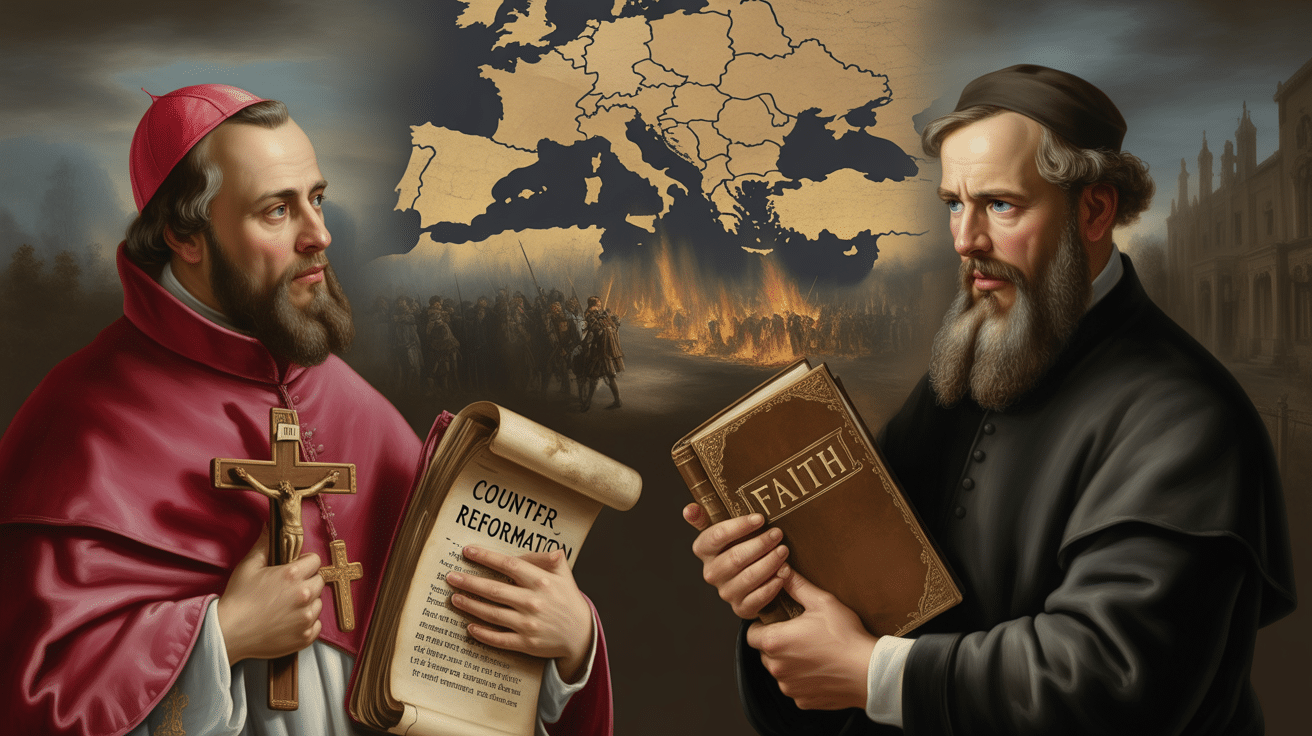
Religion in the 17th century was deeply intertwined with politics and identity, often driving wars and shaping societies.
The